
Why Do Traditional ERP Replacements Fail to Meet Objectives?
According to real-world data from McKinsey & Company, 70 percent of complex, large-scale change programs do not reach their stated goals. This harsh reality drives small and mid-sized business leaders toward low-risk augmentation over complete system replacement.
Let's be honest about how most SMB software upgrades happen. The ownership team decides the company needs a digital overhaul. They sign a hefty check for a brand new, all-in-one Enterprise Resource Planning (ERP) system. Fast forward two years. The budget has doubled. The small IT team is exhausted. The warehouse still cannot ship orders on time because the new software does not understand your unique supply chain quirks.
Business owners and financial leaders often buy into the myth that a complete rip-and-replace is the only way forward. But tearing out your core transactional system is like trying to rebuild an airplane engine mid-flight. It introduces operational risks and costly downtime that growing businesses simply cannot afford.
Before signing off on a massive, budget-draining migration, leadership teams need to look into smarter legacy modernization options to see if they can fix what is broken without starting from scratch. (Source: McKinsey & Company)
What Is An ERP Augmentation Strategy?
ERP Augmentation is a strategic legacy modernization framework keeping your existing core system running while adding specific new capabilities around it. This approach minimizes business disruption and dramatically lowers implementation costs.
Think of it like adding a smart home security system to an older house. You do not need to tear down the walls and rebuild the foundation just to get a better view of your front door. Instead of migrating decades of sensitive company data into an entirely new ecosystem, you leave the core platform alone to do what it does best. It continues to process basic transactions stably.
To solve the specific shortcomings of your legacy platform, you can procure or develop specialized, modern software. If you require advanced, real-time data visualization, integrate a standalone analytics platform. If remote reps need mobile access to stock levels, deploy a dedicated application. These focused modules sync seamlessly with your existing architecture without disrupting the foundational codebase.
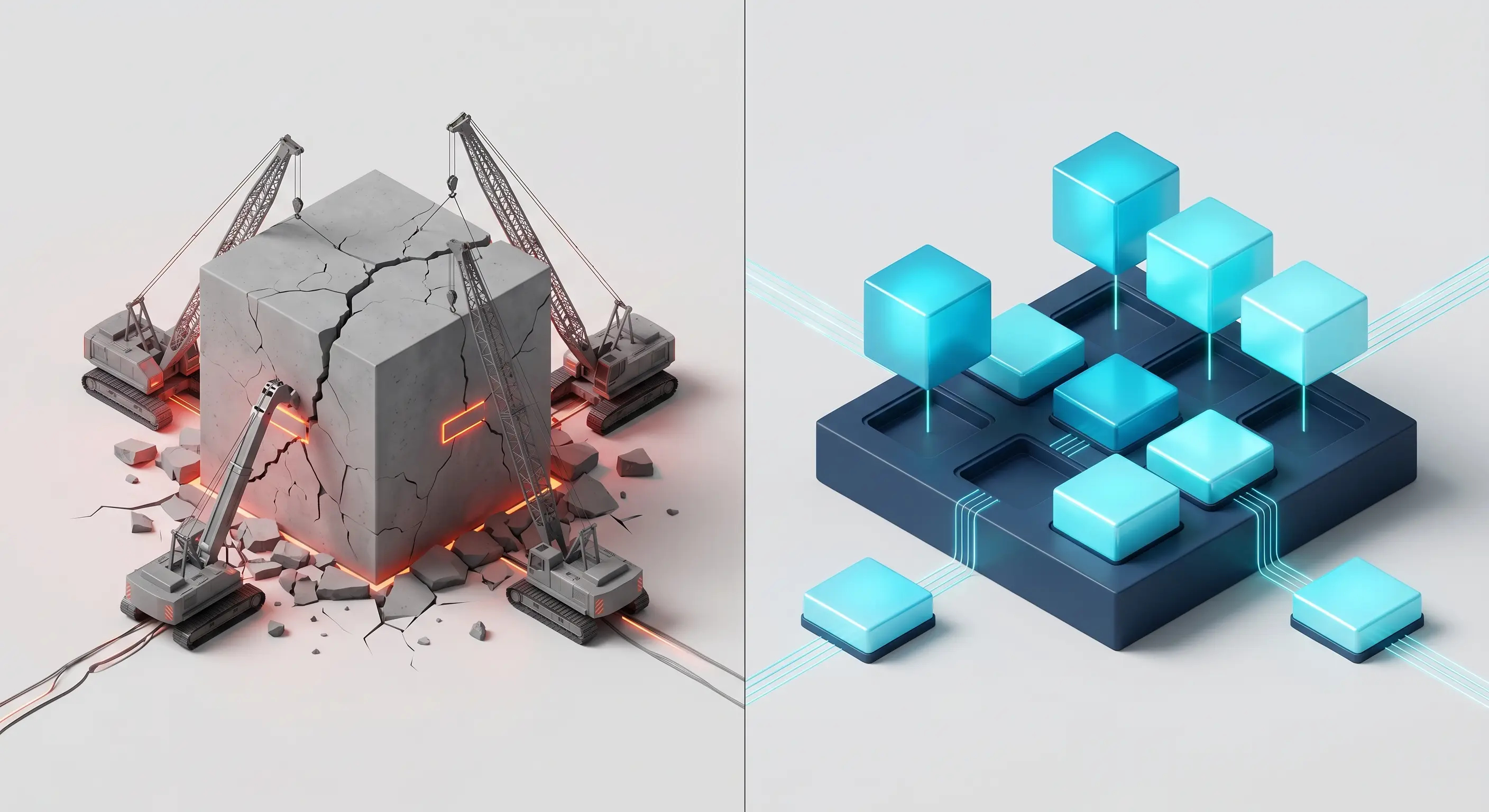
| Factor | Full ERP Replacement | ERP Augmentation |
|---|---|---|
| The Price Tag | Multi-million dollar upfront costs | Predictable, project-based spending |
| Risk of Failure | Extremely high (70% miss goals) | Very low (Changes are isolated) |
| Time to See Results | 18 to 36 painful months | 3 to 6 months |
| Impact on Employees | Requires massive company-wide retraining | Teams keep using familiar workflows |
How Do API Ecosystems Enable Secure ERP Augmentation?
Modern Application Programming Interfaces (APIs) enable secure ERP augmentation by acting as controlled bridges between legacy databases and new software. They allow specialized applications to read and write data safely.
Older enterprise systems operate in silos. They lock data away in proprietary formats that make external reporting nearly impossible. Middleware solutions break down these walls safely. Instead of altering the legacy database structure directly, IT teams deploy middleware layers that translate outdated data formats into modern standards like JSON.
This enables a composable architecture. If your finance team wants to deploy a new AI-powered forecasting tool, the API fetches the historical ledger data. The legacy system acts purely as a secure vault. The heavy computational lifting happens entirely within the modern application. This modular approach means if a newly integrated tool fails, it does not crash the entire company database. You simply disconnect the faulty application via the API gateway while core operations continue uninterrupted.
What Are The Cybersecurity Risks Of Outdated Legacy Systems?
Outdated legacy systems present severe cybersecurity risks because vendors eventually stop providing critical security patches. ERP augmentation mitigates this by layering modern, secure cloud applications over vulnerable on-premise infrastructure.
Hackers actively target aging on-premise servers because they often lack modern authentication protocols like multi-factor authentication. When a software vendor declares end-of-life for an older ERP version, your corporate data becomes incredibly vulnerable to ransomware attacks. Replacing the entire system to achieve compliance takes years. You remain exposed during that entire transition window.
Augmentation offers a faster path to compliance. By connecting a modern Identity and Access Management (IAM) application to your legacy system, you instantly upgrade your security posture. The modern application handles all the rigorous user verification before passing requests down to the older database. This modern buffer protects your intellectual property immediately.
How Does System Augmentation Ensure Technical Debt Reduction?
Targeted Technical Debt reduction happens when businesses replace broken workflows with specialized modern apps one at a time. This fixes immediate operational problems without risking the underlying central database.
Historically, organizations frequently implement heavy, undocumented customizations into their core platforms. They write custom code to force the system to do things it was never designed to do. This creates a messy web of workarounds that break every time there is a software update. Augmentation cleans up this mess methodically.
Here is how smart operations teams handle it:
- They identify the single most frustrating bottleneck in the company right now.
- They set up secure connections so modern tools can safely read the old ERP data.
- They introduce a lightweight, modern application designed specifically to solve that one bottleneck.
- They move employees over to the new, faster tool and permanently delete the old, hacked-together code.
Which Departments See The Fastest ROI From Modular Upgrades?
Finance and supply chain departments see the fastest Return on Investment (ROI) from modular upgrades. These teams rely on real-time data accuracy, making them perfect candidates for targeted application integrations.
When expanding system capabilities, CIOs must prioritize departments where manual work creates the highest financial loss. The supply chain department often struggles with blind spots in inventory tracking. A legacy system might only update stock levels once a day via batch processing. By augmenting the system with a real-time warehouse management module, logistics managers instantly reduce stockouts and optimize shipping routes.
The finance department frequently spends weeks manually reconciling invoices in spreadsheets. Integrating an automated reconciliation tool directly into the general ledger cuts month-end close times drastically.

How Can CIOs Guarantee Business Disruption Minimization?
Achieving true Business Disruption Minimization requires a phased rollout strategy. Organizations must initially deploy secure, read-only data integrations to verify absolute precision prior to migrating any active operational tasks.
If there is one thing that keeps operations leaders awake at night, it is the fear of losing data visibility during a transition. If a branch manager cannot see accurate inventory for even 48 hours, it costs the business real money. You can actually calculate this risk by running a proper downtime analysis before starting any project.
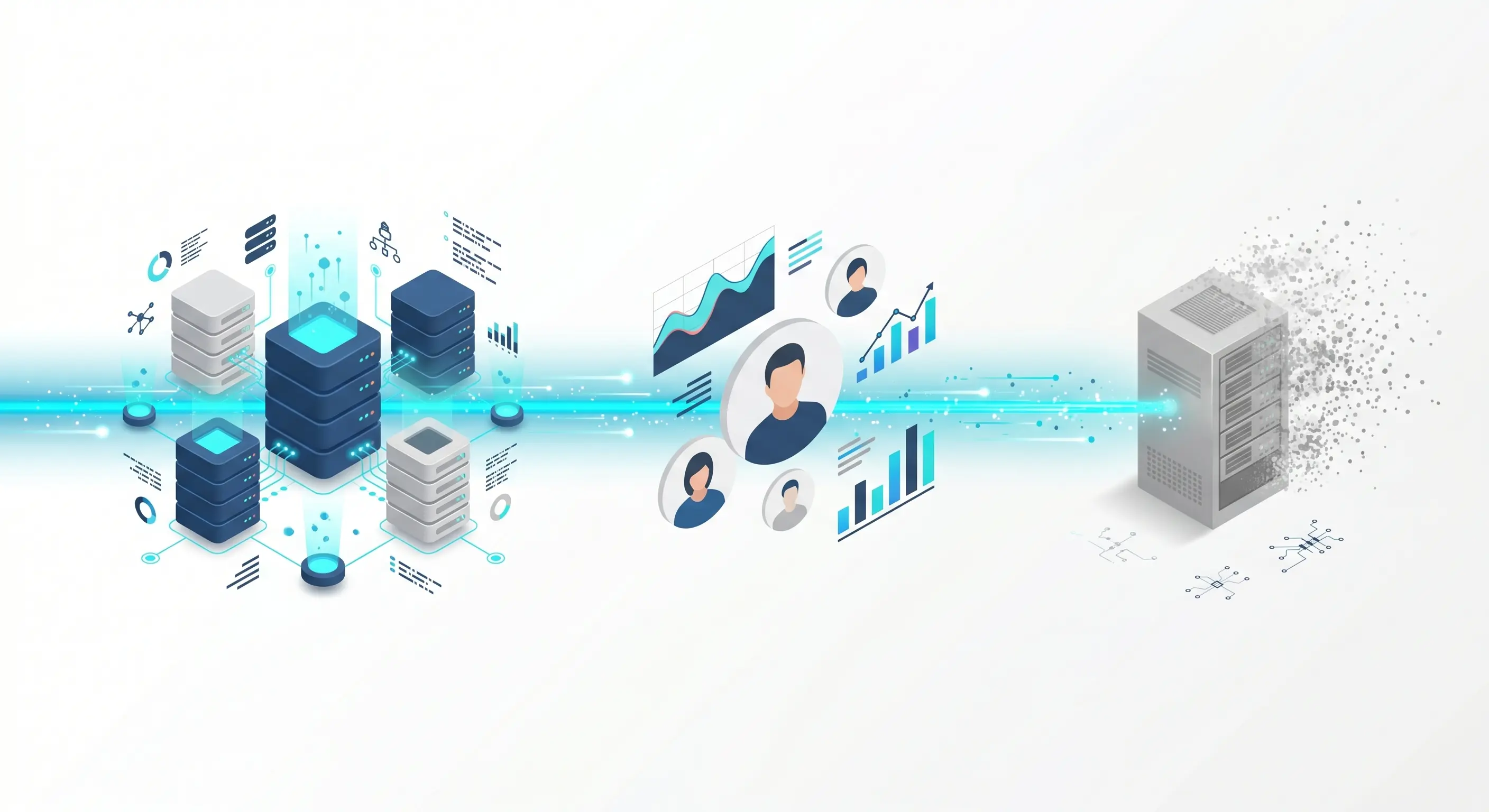
Because operational continuity is paramount, augmentation relies on a careful testing philosophy. Instead of flipping a switch and hoping everything works, you connect the new tool and let it just read the data flow. Once the finance and operations teams confirm that the numbers match perfectly, you turn on the two-way sync. For businesses with highly complex databases, a clean data engineering setup ensures that not a single piece of critical operational information gets lost in translation.
How Does 3ALICA Ensure Secure Operations Modernization?
To bypass the extensive risks of a full system overhaul and enhance your business processes in a matter of months, partner with 3ALICA. Contact our team at 3alica.com today to build a risk-free roadmap.